01

Transcriptomic Signatures of Recurrent Implantation Failure

Carly Keshen, MSc Candidate

Despite advances in IVF, recurrent implantation failure (RIF) remains one of the most frustrating challenges in reproductive medicine. This project uses transcriptomic analysis of endometrial tissue to identify molecular signatures that distinguish RIF patients from fertile controls, with the goal of developing clinically actionable biomarkers. Despite advances in IVF, recurrent implantation failure (RIF) remains one of the most frustrating challenges in reproductive medicine. This project uses transcriptomic analysis of endometrial tissue to identify molecular signatures that distinguish RIF patients from fertile controls, with the goal of developing clinically actionable biomarkers.

Major Questions
What gene expression patterns characterize the endometrium in RIF patients during the window of implantation? Can transcriptomic classifiers predict implantation success and guide personalized treatment strategies? How do meta-analytic approaches improve the robustness of endometrial biomarker discovery?
Methods
RNA SequencingMeta-analysis Differential ExpressionMachine Learning ClassifiersClinical Validation
Related Publication

Russell SJ et al. Autologous platelet-rich plasma improves the endometrial thickness and live birth rate in patients with recurrent implantation failure. J Assist Reprod Genet, 2022.

Add project image
e.g. endometrial histology
02

The Digital Embryo: Predictive Multi-Omic Models

Dr. Stewart Russell, Principal Investigator

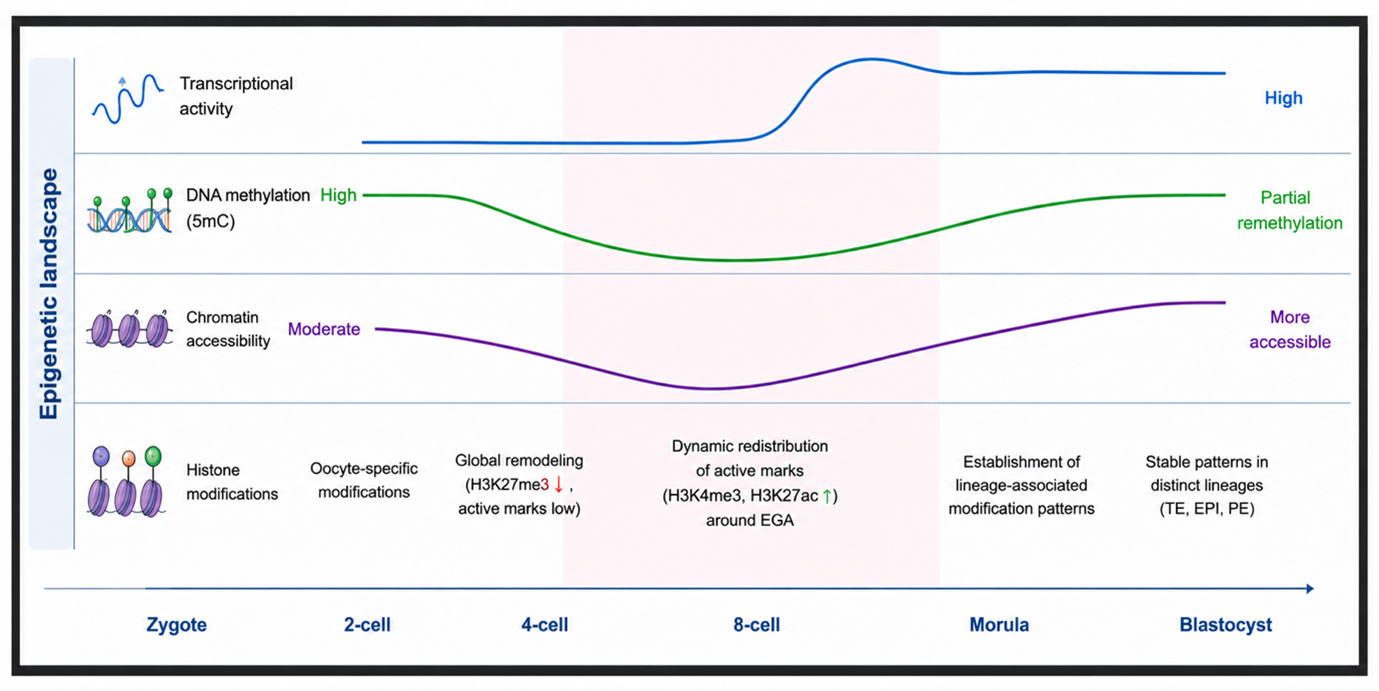
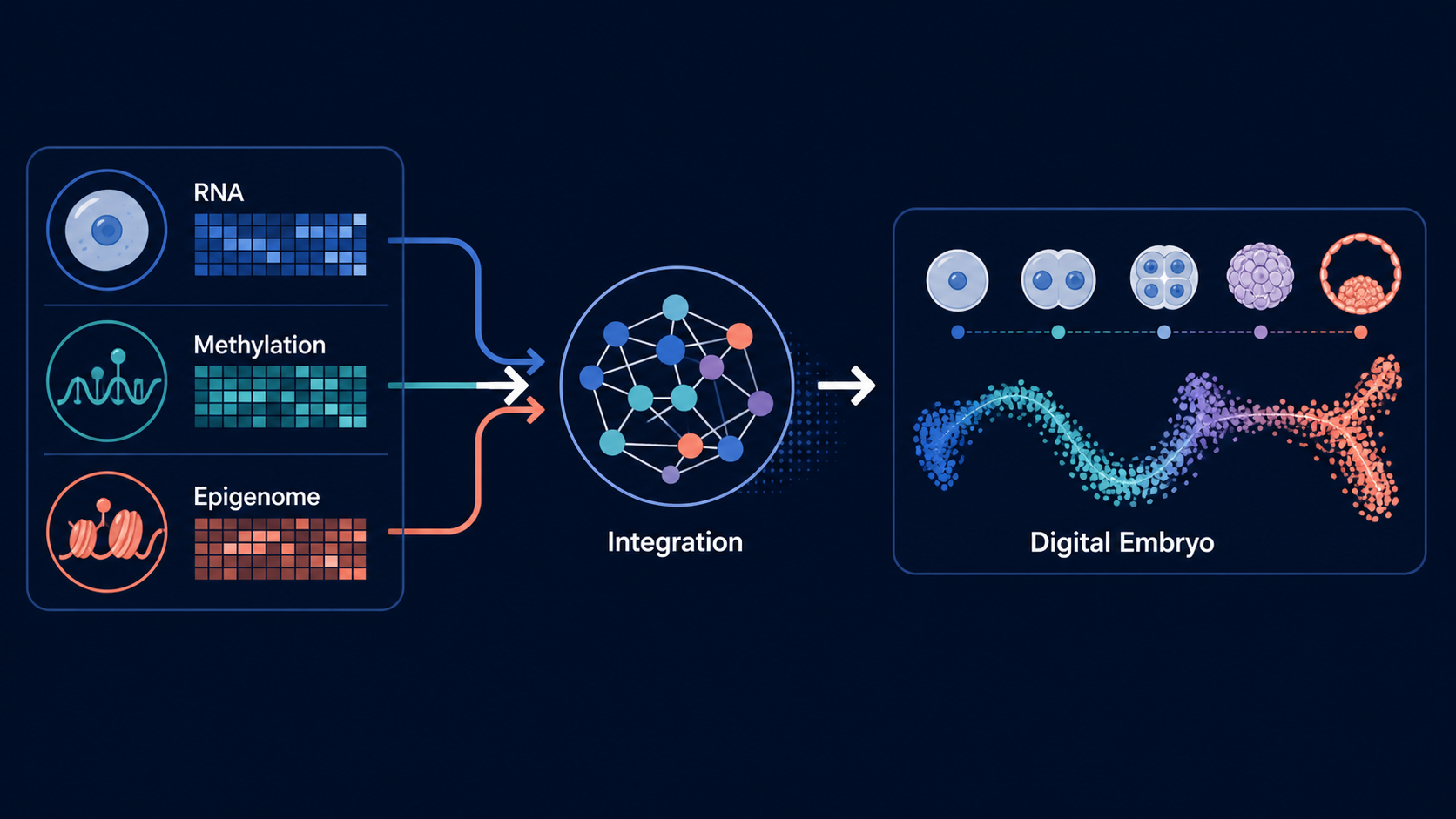
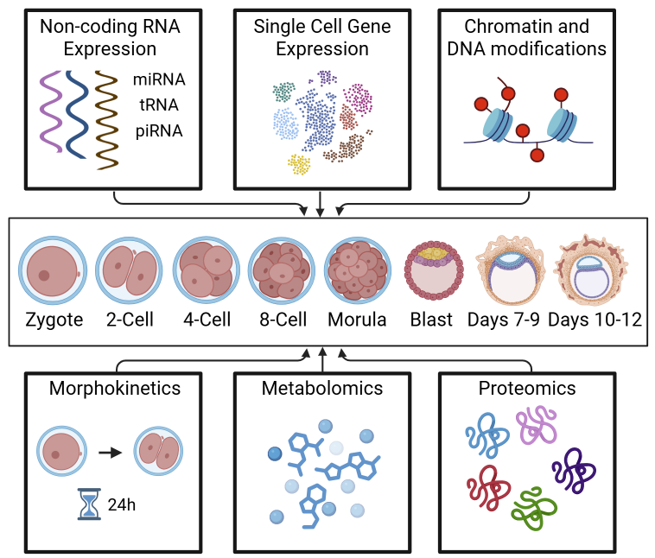
The Digital Embryo project aims to construct computational models that integrate multi-omic datasets — transcriptomics, epigenomics, chromatin accessibility — to predict embryo developmental trajectories. By unifying publicly available single-cell data with novel clinical samples, this initiative seeks to build the first comprehensive in silico model of human preimplantation development.

Major Questions
Can multi-omic data integration reveal cell fate decision mechanisms invisible to single-modality analysis? How do epigenetic reprogramming dynamics predict developmental competence? What computational frameworks best capture the temporal and molecular complexity of embryogenesis?
Methods
Single-cell Multi-omicsData Integration (GLUE/fastMNN) Optimal TransportTrajectory InferenceGene Regulatory Networks
Related Publication

Russell SJ, Zhao C et al. An atlas of small non-coding RNAs in human preimplantation development. Nature Communications, 2024.
Add project image
e.g. UMAP / pipeline figure
03

Single-Cell Transcriptomics of Aneuploid Embryo Development

Sheila (Yat Sze) Kwok, PhD Candidate

Aneuploidy is remarkably common in human embryos and a leading cause of implantation failure and pregnancy loss. This project uses single-cell transcriptomics of post-implantation human embryos to understand how aneuploid cells are depleted in mosaic embryos and how lineage dynamics are affected by chromosomal abnormalities.

Major Questions
What transcriptomic signatures distinguish aneuploid from euploid cells in mosaic human embryos? How does the embryo selectively deplete aneuploid cells during early development? What are the lineage-specific consequences of mosaicism for downstream development?
Methods
Single-cell RNA-seqscDNA-seq Extended Embryo CultureLineage AnalysisPGT-A
Related Publication

Kwok SYS, Haham LM, Russell SJ et al. Single-cell transcriptomics of postimplantation embryos: unveiling aneuploidy effects and lineage dynamics. Research Square, 2025.

Add project image
e.g. blastocyst IF / aneuploidy
04

Exploring Transposable Elements and Alternative Splicing Events as Drivers of Embryonic Development

Arsh Verma, HBSc Candidate

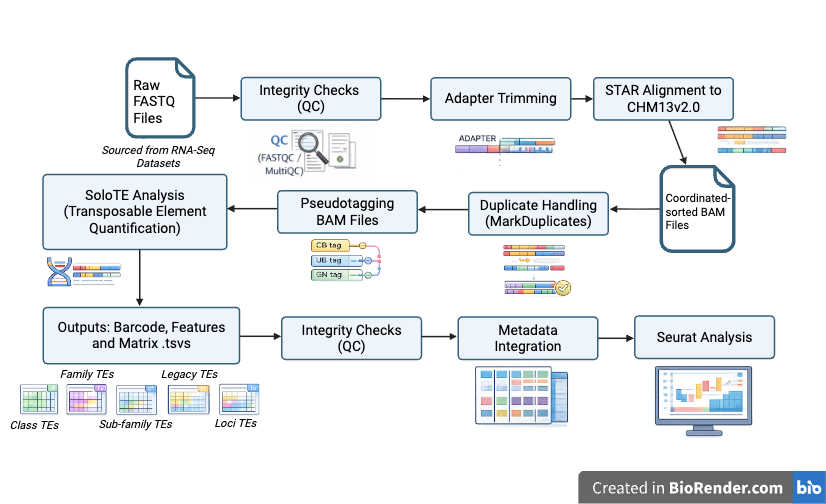
From a multi-omics perspective, the influence of Transposable Elements (TEs) and alternative splicing events (SEs) on preimplantation embryonic development remains ambiguous. In the Digital Embryo’s initial transcriptomic phase, I will analyze preimplantation single-cell RNA-sequencing datasets to generate reproducible feature matrices outlining TE activity (using SoloTE, a bioinformatics tool) and isoform/splicing dynamics (using Salmon and SUPPA2) across embryos that arrest versus those that develop successfully. The analysis will focus on the most robust and highly expressed TE classes, subfamilies, and loci, as well as key splicing events, helping to strengthen the predictive abilities of the Digital Embryo. Generated matrices containing common TE features and SEs (expressed via Percent Spliced-In values) will undergo quality control and metadata integration to support downstream comparison analysis with literature describing the functional roles of specific TEs and SEs.

Major Questions
Which transposable element subfamilies/loci and/or alternative splicing events are upregulated or downregulated in association with the successful development or arrest of preimplantation embryos? Are there specific TE features or splicing events that occur at particular cell lineages, embryonic days, or developmental stages that are associated with embryonic arrest or successful growth trajectories? How so and why?
Methods
Computational Pipeline Building Literature Review Differential Expression Alignments and QCs Feature and Gene Quantifications Seurat Analysis Bioinformatics Tools for Transcriptomic Analysis
description
05

RNA Velocity Based Prediction of Embryo Progression and Arrest

Eitan Lenga, HBSc Candidate

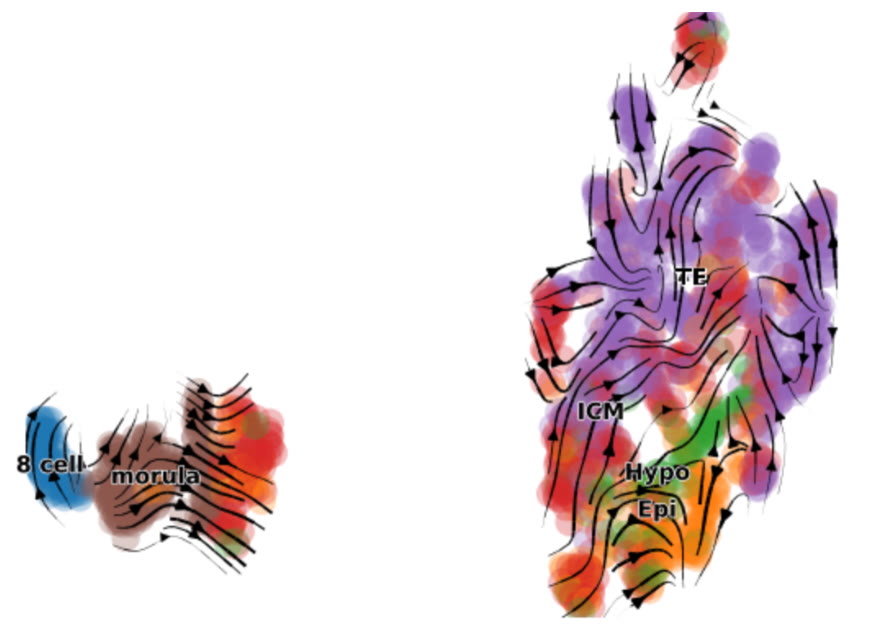
I am building a reproducible RNA velocity pipeline for early human embryo single-cell RNA-seq datasets to infer developmental directionality from spliced vs. unspliced transcription. By integrating multiple public embryo datasets on the Nibi cluster, I generate Velocyto loom files and apply scVelo to estimate velocity fields, confidence metrics, and gene-level dynamics. I then compare “typical” developmental trajectories against cleavage-stage arrest phenotypes to identify where transcriptional progression diverges. The goal is to create a standardized workflow that supports cross-dataset comparisons and prioritizes candidate molecular signatures linked to embryo arrest.

Major Questions
How do inferred RNA velocity directionality and confidence differ between normally developing embryos and cleavage-stage arrested embryos? Which genes show the strongest dynamic signatures (phase-portrait behaviour / velocity signal) during the embryo development, and how are these signatures altered in arrest subtypes? Can velocity-derived metrics (e.g., velocity length, confidence, and transition structure) be used as quantitative features for comparing developmental progression across datasets and conditions?
Methods
Velocity (run-smartseq2) to generate spliced/unspliced counts as .loom files Scanpy preprocessing (HVG selection, PCA, neighbours, UMAPs) scVelo (stochastic model, velocity graph, confidence/length metrics)
description
06

Automated Analysis of Embryo Development from Time-Lapse Imaging Using Deep Learning and Interactive Annotation Tools

Eric Chu, HBSc Candidate

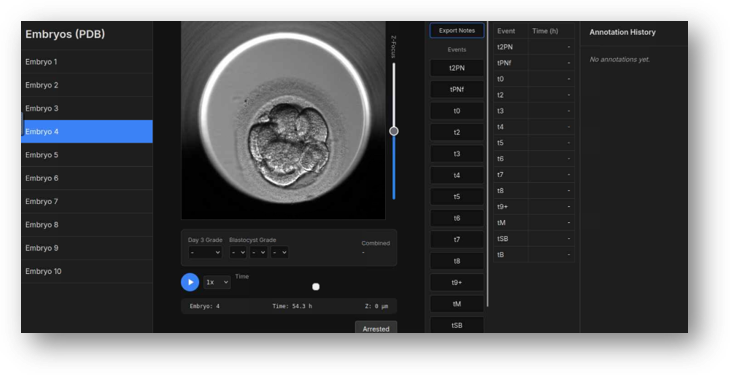
My project aims to develop a convolutional neural network (CNN) pipeline for analyzing time-lapse image data of developing embryos. The pipeline will be able to process large image sequences to detect and classify important developmental events using a trained model. To support this pipeline, I have developed an interactive embryo viewer and annotation application to allow researchers to efficiently label key developmental stages and morphological features. The CNN pipeline and genetic data will be combined to create the Digital Embryo.

Major Questions
How can convolution neural networks be utilized to accurately identify key morphological events from embryo time-lapse imaging data to make predictions about embryo viability? What key morphological features of developing embryos are most predictive of successful or unsuccessful developmental outcomes? How can the CNN pipeline be scaled and integrated with genetic data to create the Digital Embryo?
Methods
Processing and annotating time-lapse imaging data Deep learning models (FEMI and GRU) Designing a custom embryo viewer and annotation application to support the CNN pipeline
description
07

Building a Multi-Omic Atlas of Human Preimplantation Development and Embryonic Arrest

Matthew Shen, Incoming Freshman at University of Pennsylvania, Neuroscience Candidate

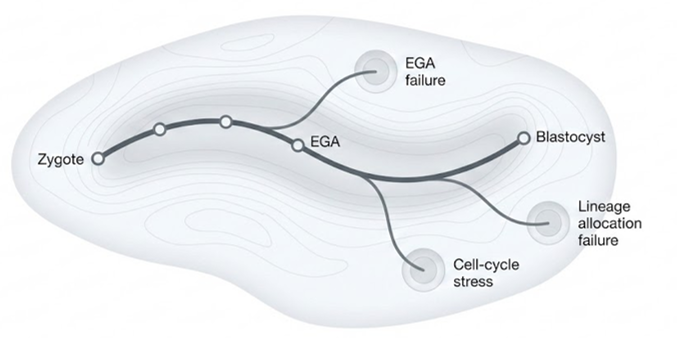
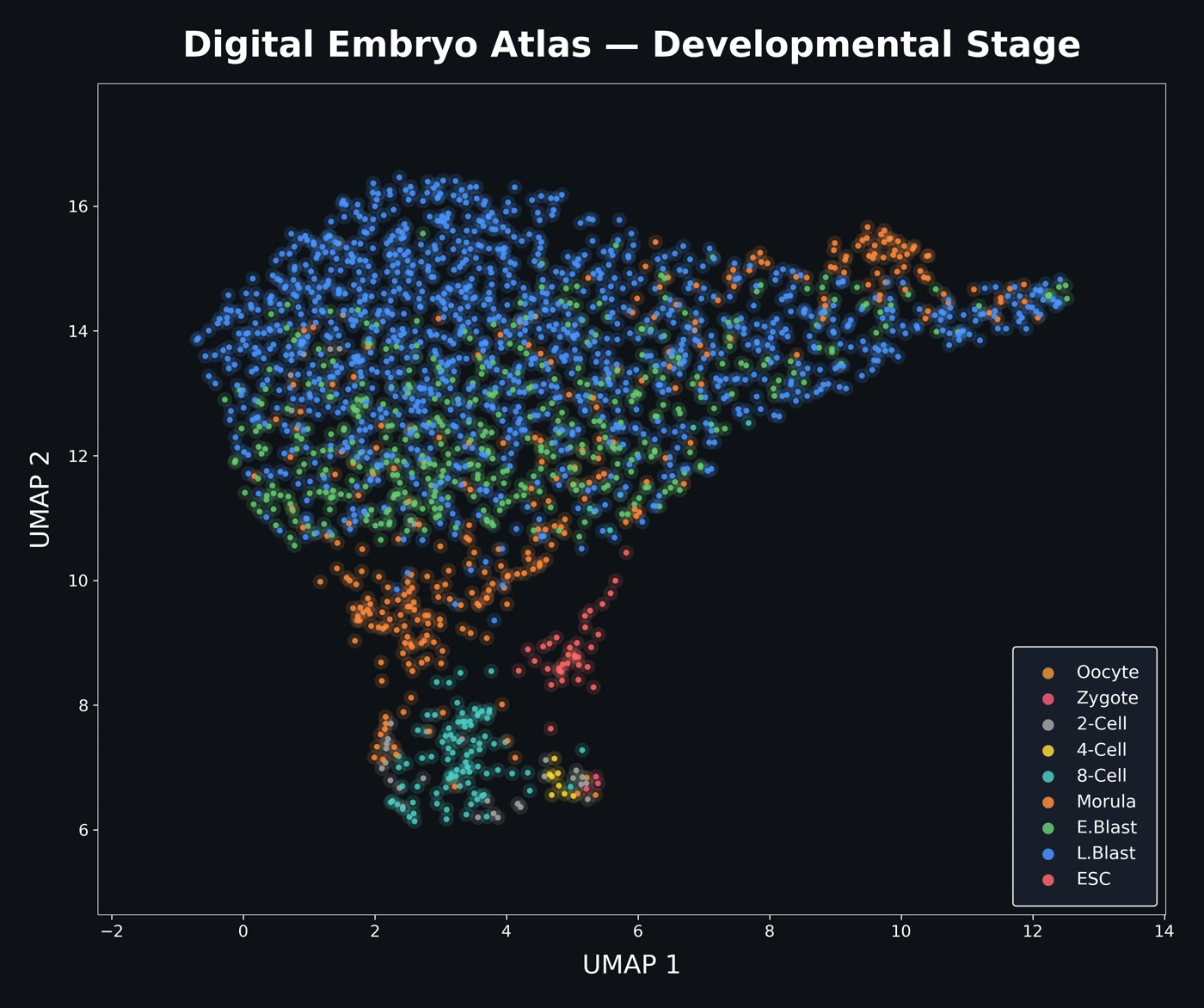
I am building a unified single-cell RNA-seq atlas of human preimplantation embryo development by reprocessing datasets through a standardized pipeline on the Nibi HPC cluster. Each dataset is aligned to the CHM13v2.0 reference genome using STAR, quantified with featureCounts and Salmon, and quality-controlled with BAM-level mitochondrial estimation, preserving high-mito cells that represent the arrest signal under study. By harmonizing metadata and applying consistent normalization across thousands of cells spanning zygote to blastocyst, I create a foundation for cross-dataset comparison of normal developmental trajectories against embryonic arrest. The goal is to classify distinct molecular failure modes and identify candidate regulatory drivers of why over half of IVF embryos fail to develop.

Major Questions
Where do arrested embryos diverge from normal developmental trajectories in transcriptomic space, and do distinct failure modes cluster into reproducible classes? Which genes and regulatory programs distinguish successful embryonic genome activation from incomplete or failed activation in arrested embryos? Can a uniformly reprocessed multi-dataset atlas reveal cross-study molecular signatures of arrest that individual datasets miss?
Methods
STAR alignment to CHM13v2.0 + featureCounts/Salmon quantification Scran normalization, HVG selection, PCA, UMAP visualization BAM-level mitochondrial % estimation (samtools idxstats) to preserve arrest signal
description
08

Expressed Genetic Variant Analysis from Bulk RNA-seq in Recurrent Implantation Failure

Emmanuel Arzoumanidis, HBSc Candidate

My project uses bulk endometrial RNA-seq data to identify expressed genetic variants associated with recurrent implantation failure (RIF). I am repurposing these datasets to detect single nucleotide variants and small indels within expressed transcripts. I use a standardized bioinformatics approach to call, filter, annotate, and prioritize variants, then compare them against literature-supported RIF-associated variants. The goal is to determine whether expressed variants in implantation-related pathways may contribute to expression of the RIF-associated phenotype.

Major Questions
Can expressed genetic variants in the endometrium play a major role in contributing to recurrent implantation failure? Which biological pathways are most strongly implicated by expressed variations detected in RIF, such as angiogenesis, immune regulation, methylation, and endometrial receptivity?
Methods
Quality control (FastQC, MultiQC) Alignment (STAR) RG addition and post-alignment processing (GATK) Variant Calling and joint genotyping (GATK HalotypeCaller, CombineGVCFs) Annotation (bcftools) Genotype Analysis
description